
What is radiofrequency (facet) denervation?
Radiofrequency denervation is a minimally invasive treatment for back pain. It is also known as facet denervation. During the procedure, the surgeon heats two small nerves. These nerves supply the facet joints. Facet joints are small paired joints between the vertebrae. Therefore, they can become a source of pain.
These nerves carry pain signals from the joints. However, they have very few other functions. After treatment, the nerves stop sending pain signals to the brain. As a result, the pain decreases.
Radiofrequency denervation has other names too. For example, it is called facet rhizolysis, radiofrequency ablation or radiofrequency neurotomy.
When is facet joint denervation needed?
Your doctor may suggest denervation if the pain comes from the facet joints. However, doctors recommend it only in certain cases. First, other treatments should be tried. For example, physiotherapy often comes first. If it does not help, denervation becomes an option.
How is the procedure performed?
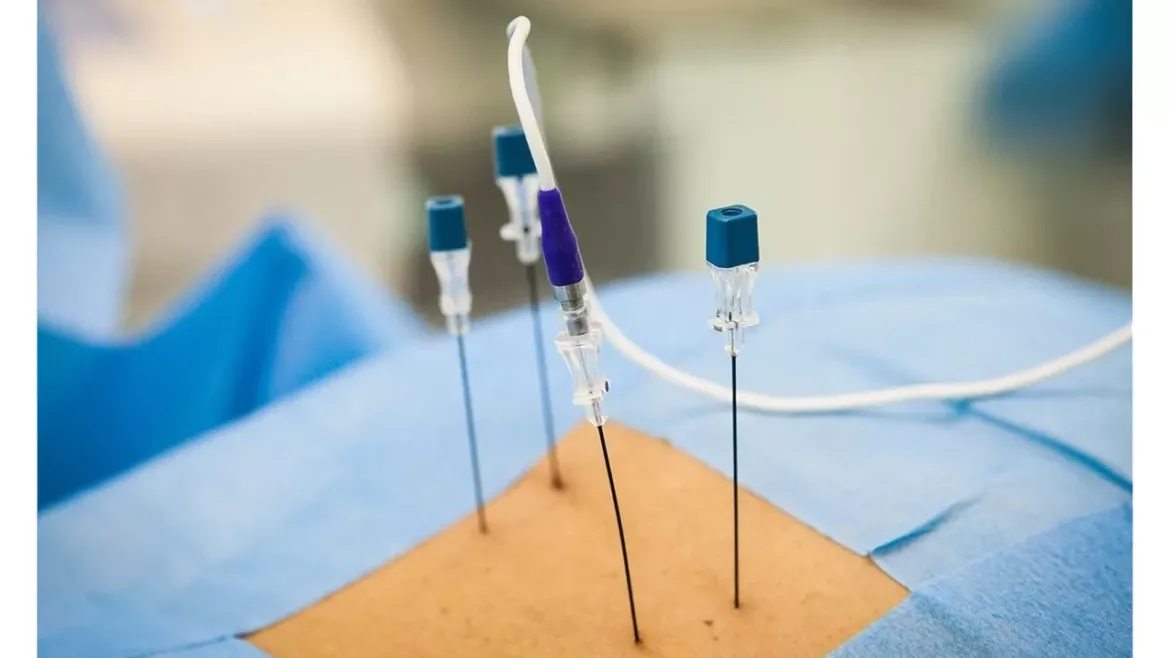
First, the doctor helps you lie face down. Then you receive a local anaesthetic. It numbs the area. Next, the doctor guides a thin 1 mm probe to the nerves. He works under X-ray control (fluoroscopy).
When the probe is in place, the doctor gives an intravenous sedative. Therefore, you feel little discomfort. Then the probe tip heats to 80 °C. This is enough to treat the nerve.
Is the procedure effective and what are the alternatives?
Usually, you have already tried other treatments. For example, painkillers and physiotherapy. However, your consultant can also discuss alternatives with you.
If you responded well to diagnostic injections, the procedure often works well. As a result, it can relieve back pain for a long time. Then you can stop taking painkillers. Finally, you return to a life without pain.
What is the effect and how long does it last?
In most cases, relief lasts from three months to one year. However, the nerve can regenerate within a year. Therefore, the pain may return. But if the first procedure helped, a repeat one usually helps too.
Learn more about the doctor and other neurosurgery services in Zaporizhzhia. Also, you can book a consultation by phone: +380 (67) 901-37-01.