Epidural nerve block of the spine in Zaporizhzhia
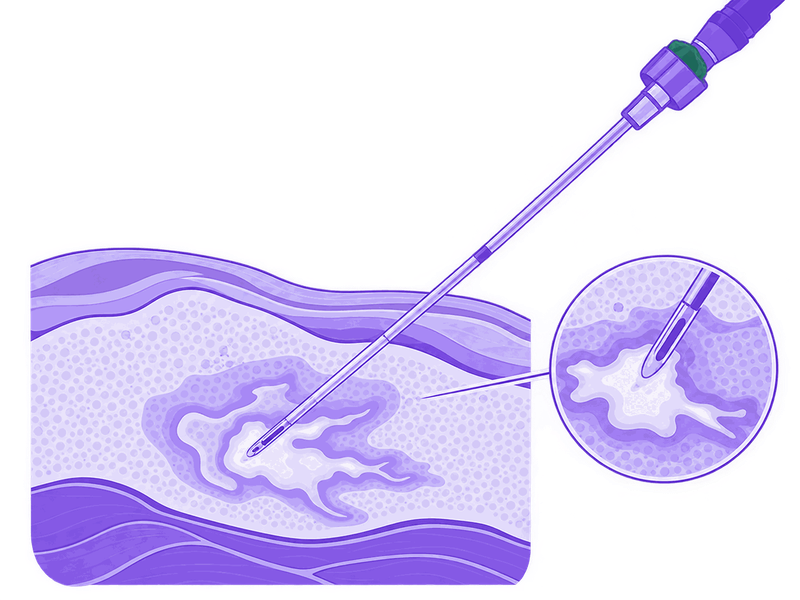
An anaesthetic and anti-inflammatory drug is delivered by a thin needle exactly where the pain comes from: to the nerve root, into the epidural space or to a facet joint, under X-ray guidance. It takes fifteen minutes and you go home the same day. Relief usually comes within the first twenty-four hours.
It is often treatment and diagnosis at once: it shows whether that level is the one causing the pain. The least invasive option there is - an injection, not an operation.
- Duration
- about 15 minutes
- Anaesthesia
- local
- Hospital stay
- home the same day
- Effect
- usually within a few hours
- Incision
- none, only a needle puncture
- Follow-up
- check-up after 2–3 weeks
What an epidural block is
A painkilling and anti-inflammatory medication is brought by needle straight to the place that hurts - to the nerve root, into the epidural space or to a facet joint. Not into a muscle and not into a vein, but to the right point within millimetres, which is why the work is done under X-ray guidance.
A block has two jobs at once. The first is to take away pain when it can no longer be endured and surgery is not yet indicated. The second is diagnostic: if the pain goes after an injection at a particular level, the source has been found. That matters especially when the MRI shows several changes and it is unclear which of them causes the symptoms.
The types used most often are the epidural block, the transforaminal (selective nerve root) block and the facet joint block.
Who it is for
- Acute pain in the lower back or neck when medication brings no relief.
- Radicular pain shooting into the leg or arm.
- Facet syndrome - pain on extending and turning the trunk.
- The need to establish which level causes the pain before planning surgery.
- A flare-up in a patient for whom surgery is contraindicated for now on health grounds.
Contraindications
- Skin infection at the puncture site, general infection, fever.
- Blood clotting disorders and anticoagulant use without correction.
- Allergy to local anaesthetics or to the medication used.
- Uncontrolled diabetes - when steroid medication is used.
How it goes
- 1 Preparation There is almost none. Tell us in advance which medicines you take regularly, especially blood thinners.
- 2 Position Usually face down, sometimes on your side. The skin is cleaned with antiseptic.
- 3 Anaesthesia The puncture site is numbed - after that you feel pressure, not pain.
- 4 Injection The needle is guided to the target under X-ray, its position is checked and the medication is delivered.
- 5 After Half an hour to an hour of observation, then home. Better not to drive that day.
Anaesthesia
Local anaesthesia only. A general anaesthetic is not needed and would get in the way: during the procedure it matters that you can say what you feel - where it radiates, when the familiar sensation appears. That is part of the diagnosis; it tells me the needle has reached the right place.
The skin at the puncture site is numbed separately, so the block itself feels like pressure rather than pain. Half an hour under observation afterwards, and it is better not to drive that day.
Recovery
- first hour
- observation, then home
- first day
- rest, no load, no driving
- 2–3 days
- the pain is usually noticeably less
- 2–3 weeks
- follow-up visit, we assess the effect
Risks and possible complications
- A temporary increase in pain on the first day - it happens and passes.
- Headache after a dural puncture - rare.
- Infection at the injection site - very rare, prevented by sterile technique.
- A short-lived rise in blood sugar and blood pressure when steroid medication is used.
- No effect at all. That is also a result: the source of the pain is elsewhere, and that changes the plan.
Alternatives
- Medication and physical therapy. The first step, and always the starting point: anti-inflammatories in a short course, adjusted loads, work on the back muscles.
- Radiofrequency denervation. If the block brought relief but not for long. The effect then lasts months instead of weeks.
- Radiofrequency ablation. For chronic pain of other origin, including after previous operations.
- Microdiscectomy. When the cause is a herniated disc and there are grounds for surgery: persistent leg pain, weakness, numbness.
A block rules nothing out and gets in the way of nothing: most often it is the first step, after which it becomes clear what to do next.
Where to start
What to do, and how much of it, is visible on the scans. Start with a consultation: bring an MRI or CT of the relevant part of the spine, no more than six months old, discharge summaries and an electronic referral from your family doctor, if you have one. If you have had blocks before, say which ones and with what effect - that matters.
Bring the scans on a disc or a flash drive - I look at the images themselves, not the report: what to bring and on what.
I perform blocks in Zaporizhzhia, at the same hospital where I see patients - there is no need to go anywhere else. Call - I will tell you what to do next.
Questions about the procedure
Does it hurt?
What hurts is usually the pain you came with. The injection itself is easy to tolerate: the skin is numbed, and after that you feel pressure. A fine needle and X-ray guidance mean the spot is not searched for blindly.
How long does the effect last?
It varies: from a few weeks to many months. If relief came but faded quickly, that is an argument for denervation, which lasts longer.
How many blocks can be done?
Not indefinitely. If each one works for a shorter time, the blocks have stopped being treatment and become a way of postponing a decision. Then we discuss what comes next.
Does a block cure the herniation?
No. It relieves the inflammation and pain around the compressed root. The herniation itself remains, but in that time the body often copes on its own - some herniations shrink.
Book a visit
Mon-Fri 08:30-15:00. On operating days I cannot answer the phone: message the same number instead.
+380 67 901 37 01Conditions this is used for
Conditions where this method is part of the treatment plan. Each page explains when surgery can be avoided and when it cannot wait.

Dmytro Ivakhnenko - spine neurosurgeon in Zaporizhzhia
Spine neurosurgeon of the highest category, PhD in Medicine, associate professor, 30 years in practice. Spine and nerve surgery in Zaporizhzhia.