Treatment of a pinched nerve in compression neuropathy in Zaporizhzhia
A nerve is compressed where the space is tight: most often the ulnar nerve at the elbow, less often the same nerve at the wrist. The little and ring fingers go numb, especially when the elbow stays bent - in sleep, at the wheel, with a phone to the ear. The hand weakens, fine movements lose precision, and in late cases the muscles between the fingers waste away.
The longer the nerve stays compressed, the worse it recovers once it is freed.
- Symptoms
- numbness of the little and ring fingers, a weak hand, elbow pain
- Work-up
- nerve conduction study of the hands, ultrasound of the nerve
- Without surgery
- episodic symptoms, correcting elbow position, a night splint
- Surgery
- decompression of the nerve, with transposition if needed
- Consultations
- room 211, Mon-Fri 08:30-15:00
- The numbness has become constant - there are no clear intervals.
- The spaces between the fingers on the back of the hand are hollowing, the muscles are wasting.
- The fingers take on a "claw" position and do not straighten fully.
- You cannot hold a sheet of paper between thumb and index finger.
As with carpal tunnel syndrome, time matters here: a wasted muscle recovers poorly.
What cubital tunnel and Guyon's canal syndrome are
The ulnar nerve supplies sensation to the little finger and half the ring finger, and the small muscles of the hand - the ones responsible for precision: spreading the fingers, holding an object between them, playing an instrument.
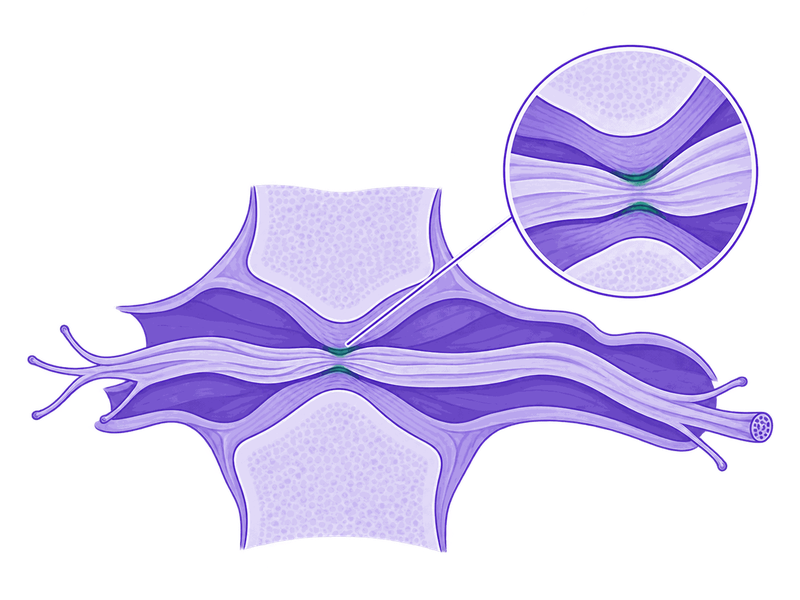
Along its course it passes twice through narrow places. The cubital tunnel at the elbow - where you feel that jolt when you knock it against a table edge. Guyon's canal at the wrist, on the little-finger side.
In both places the nerve lies superficially and is poorly protected. Compression comes from the habit of keeping the elbow bent for long periods, from leaning on the elbow, from the after-effects of a fracture, from a cyst or a thickened ligament.
Cubital tunnel syndrome is the second most common entrapment neuropathy after carpal tunnel syndrome.
Symptoms
- Numbness and tingling in the little finger and half the ring finger.
- Symptoms worsen when the elbow stays bent: driving, on the phone, in sleep.
- Pain along the inner side of the elbow, sometimes radiating into the forearm.
- A weak hand: holding an object between the fingers is harder, small things get dropped.
- Clumsiness in fine movements - fasteners, keys, handwriting.
- In advanced cases, hollowing of the muscles between the fingers and a "claw" hand.
Causes
Prolonged elbow flexion: sleeping with the arm bent, driving, talking on the phone. The habit of leaning on the elbow - at a desk, on an armrest.
The after-effects of a fracture or dislocation at the elbow, degenerative arthritis. Cysts, thickened ligaments. Occupations involving repeated bending and straightening of the elbow.
Guyon's canal syndrome at the wrist is often linked to prolonged pressure on the base of the palm - in cyclists, for example, and in people working with vibrating tools.
How we diagnose it
A nerve conduction study is the main investigation. It establishes the level of compression: elbow or wrist. That is essential, because the operations at those two sites are different.
Ultrasound of the nerve shows thickening of the nerve, a cyst, a compressing structure, or the nerve slipping out of place when the elbow bends.
An MRI of the neck when the picture is atypical: numbness of the little finger can also come from a C8 root problem in the neck.
At the examination we use tapping over the nerve at the elbow, the paper-holding test and the strength of finger spreading.
The nerve conduction study and the ultrasound if they have been done, and neck images if you have them. If you have none of that, call - I will tell you what your case needs.
Bring the scans on a disc or a flash drive - I look at the images themselves, not the report: what to bring and on what.
Consultations in Zaporizhzhia, at the City Hospital of Emergency and Ambulance Care: 2nd floor, room 211.
How we treat it
Correcting position
Changing working habits
Surgery - decompression of the nerve
Indications for surgery
- The numbness is constant.
- There is weakness and wasting of the hand muscles.
- The nerve conduction study shows marked impairment.
- Several months of conservative measures have brought no result.
Most often this means decompression of the nerve: the structure squeezing it is divided and the nerve is freed. Sensation returns sooner than strength - the muscles need time to recover.
Pain and numbness usually ease within the first weeks. Strength and fine motor control take longer - months - and depend on how far the muscle had already suffered.
The sutures come out after about two weeks and full use returns after four to six weeks. If the nerve was transposed, the restrictions last a little longer.
Questions
Why is it the little finger that goes numb?
The ulnar nerve supplies the little finger and half the ring finger. If the thumb, index and middle fingers go numb, that is carpal tunnel syndrome - a different nerve and a different site of compression.
Could it be coming from my neck?
Yes, a C8 root problem in the neck gives a similar picture. A nerve conduction study tells them apart, and sometimes an MRI of the neck is needed.
Will simply not leaning on the elbow help?
At an early stage, quite possibly. That is exactly why treatment starts with habits and a night splint rather than surgery.
What does "transposing the nerve" mean?
If the nerve slips out of its groove when the elbow bends and gets injured, it is moved forward into a protected position. That decision is made during the operation, on what is found.
How does this differ from Guyon's canal syndrome?
By the site of compression: cubital tunnel syndrome is at the elbow, Guyon's canal syndrome at the wrist. The symptoms are similar, but in Guyon's canal syndrome sensation on the back of the hand is usually preserved.
Call me and I will tell you what to do next
Mon-Fri 08:30-15:00. On operating days I cannot answer the phone: message the same number instead.
+380 67 901 37 01How it is treated
Procedures used for this condition. Each page covers how it goes, who it suits and how long recovery takes.

Dmytro Ivakhnenko - spine neurosurgeon in Zaporizhzhia
Spine neurosurgeon of the highest category, PhD in Medicine, associate professor, 30 years in practice. Spine and nerve surgery in Zaporizhzhia.